A good Cheeseburger is better than a good Steak, Lamb Chop, or any other form of Meat.
The title says it all. A good cheeseburger is the best meat based meal on the planet. The combination of the meat, cheese, and a good bun is a perfect combination. A single steak with seasoning and sauce really doesn't compare. Lamb chops, lobster, ham, or any other kind of meat you can think of just doesn't compare.
I'm not talking about fast food garbage or some inferior diner burger. But a good cheeseburger with a fresh bun (the most important piece) and high grade meat.
Rutt's Hut is a restaurant in Clifton, New Jersey known for its deep-fried hot dogs. In addition to the Ripper, customers can also order the dogs 'In-And-Out' style which is only in the hot oil briefly, and the 'Cremator' which is charred black.
The original roadside stand was opened in 1928 by Royal "Abe" Rutt and his wife, Anna. The family sold the restaurant to the current owners, George Petropoulakis, Louis Chrisafinis, Nicholas Karagiorgis, and George Sakellaris in late 1974. Today the building is split into three separate sections: a restaurant, a bar, and a take-out counter.
"I Miss BLIMPIE'S" Yes I do. I first discovered Blimpie's when I was a teenager growing up in 1970s New Jersey, Blimpie's made tasty Sub Sandwiches that were quite affordable. They had a wide selection of Sandwiches to choose from, but my favorite and just about only way to go was with a Blimpie Best or similar Italian-Style Combo Sandwich that was made with Ham, Salami, and Provolone Cheese, and topped with shredded Lettuce, Onions, and sliced Tomatoes, dressed with Oil & Vinegar and seasoned with Salt, Pepper, and dried Oregano. The Sandwiches always pleased. They were very consitent, the Sandwiches always tasted the same, which is a good thing, because you always knew what you were getting. You oredered the sandwich you liked, and alwasys tasted the same., and that's not easy to do. Well they didn't have to cook anything, so it was pretty simple. The Bread, Meat Products, and Cheese were always the exact same on any Sandwich you ordered. The only way they could possibly screw up was with the seasonings of Salt, Pepper, Oil & Vinegar, and Oregano. But the empoyees were well versed and they usually did a good job. I never any complaints. I always loved my sandwiches, and was never disappointed. Not once. I nver really thought about it before, but now as I'm writing this little piece I do realized just how Good Blimpie's and their Tasty Sandwiches were. They were Pretty Amazing, come to think of it. I did about. I went, oredered my Sandwich, ate it, enjoyed it, and left, until the next time I had a craving for one, and I did at least once a month or more for years, until the Blimpie that I used to go on 4th Avenue and 13th Street closed, and I couldn't get a Blimpie Sandwich anymore. A sad day it was. I miss them, and I can't stand SUBWAY, I think they SUCK. Their sandwiches are of low quality, and I;d rather have a Blimpie, but I can't. Such is Life. It can be cruel at times. And the fact I can't eat a Blimpie Sandwich anymore, I'd say is a bit sad, but what can I do? Reminisce, that's about all I can do.
Basta !!!
DBZ
As if it were an old, reclusive celebrity, a coworker asked, "Does Blimpie's still exist?" Yes, yes, Blimpie is still alive and, presumably, well. At the very least, there are still plenty in NYC. While we associate the sandwich franchise with 1990s strip malls, did you know one of the first shops opened here in the 1960s? Here it is, your short and probably totally unnecessary history of Blimpie.
First of all, Blimpie is called that because one of the founders, Tony Conza, didn't like the sounds of "subs." Conza, along Peter DeCarlo and Angelo Bandassare, opened their first shop in Hoboken in 1964, and apparently people in the area weren't familiar with the term "hoagie," so that was out, too. As the legend goes, Conza found "blimpie" while flipping through a dictionary, and felt it was appropriate.
Blimpie began its journey on the Jersey side of the Hudson River when 3 high school pals teamed up after graduation to develop it with $2,500 in funding, They opened the first Blimpie at the corner of Seventh and Washington Streets in Hoboken, N.J., according to NJ.com.
The year was 1964, and Blimpie didn't want to sound like just another submarine sandwich company — a factor that factored into its name. Scouring a dictionary, Blimpie's young brain trust was quickly drawn to the word '"blimp" and the accompanying picture that they felt resembled the bread of a submarine sandwich (per QSR).
The ship-to-sub comparison was apt enough for founders Tony Conza, Peter DeCarlo, and Angelo Baldassare, who approved a name that would see the company long past its first location. That being said, Blimpie's first sandwich shop no longer exists.
Blimpie's ideological foundation was first laid out during a party conversation between founders Tony Conza, Peter DeCarlo, and Angelo Baldassare in Jersey City, N.J. According to the New York Times, the atmosphere and accompanying drinks catalyzed a brainstorm of business ideas. Unsure of what kind of venture to start, the future Blimpie founders tossed around concepts until they eventually settled on the idea of a sandwich shop.
Blimpie's belief that this concept could work was backed by the success of Mike's Submarines in Point Pleasant, N.J., a place that was typically bursting with patronage. Intrigued by its popularity, Blimpie's founders performed some culinary espionage by eating some of Mike's Subs. Impressed by what they ate, they opened their own sandwich shop in a similar vein. Mimicking their mentor proved a sage choice, as both sandwich chains still exist today. There is one exception, though — Mike's Submarines is now known as Jersey Mike's.
Long before "move fast and break things" became a popular startup motto, Blimpie was stirring up dust and drywall in the 1960s. Aggressively gunning for expansion, the founders of Blimpie exploded their base readily. By 1967, they had successfully expanded into Manhattan, with 10 Blimpies already churning out hoagie-style Subs.
Four of these franchises were owned by founders Tony Conza and Peter DeCarlo, and although it may not sound like much in our age of easy venture capital, running 4 Blimpies back then proved more than Conza and DeCarlo could handle.
Unable to keep lightning in the bottle without a formal business education, Conza and DeCarlo were flying by the seat of their pants. Per the New York Times, Conza and DeCarlo "admitted they weren't skilled businessmen." As it turned out, they were "incautious about the costs of goods and employee salaries."
Conza and DeCarlo would bend but would not fold, selling all 4 Blimpies they personally owned. They shifted their focus on building back Blimpie's bottom line through franchising.
In 1976 BLIMPIE SPLIT Into TWO COMPANIES
It's tough to keep even the best teams together, and the Blimpie crew was no exception. Citing a difference in opinion, as DeCarlo wanted to keep Blimpie East Coast and Conza wanted to expand southward, the original founders decided to reform Blimpie into 2 distinct companies under the same trademark.
It was decided DeCarlo would run Blimpie Metropolitan and retain control of the majority of Blimpie's New York, New Jersey, and East Coast locations. Conza would head the original company, but renamed it International Blimpie Corporation while crafting a new imprint. Conza relished the opportunity and quickly franchised Blimpies "wherever there was interest," according to the New York Times. Conza would eventually admit the error of his ways, and over the years, many of those locations damaged the brand before closing down. They allegedly drove customers up the wall with filthy bathrooms and discordant employees.
Blimpie went public in 1983
In the blur of Blimpie's forced growth throughout the 70s and 80s, they also sought public investment. Blimpie's rise was rapid, but stores were closing rapidly as well (via Reference for Business). It's clear the underwriter held reservations, as Blimpie's initial public offering debuted at 90 cents per share — an unpromising number, even when adjusted for inflation. It served as a flashing indicator that the 80s would bring turbulent times for this blimp-inspired brand.
Blimpie's aggressive expansion also resulted in marks against sanitation. Founder Tony Conza's loose approach to franchising led to undisciplined franchisees and resulted in a massive identity crisis for the Blimpie brand. According to the New York Times, Blimpie had such "renegade owners" who flouted their business formula that some bad actors even sold Chinese food and pizza. However, there was a silver lining — these maverick moves were also a cry for help, begging Blimpie to expand its menu. It became an idea it pursued in the following decade.
If you've ever wondered why Subway is so enormous, a big part of that may be Blimpie's decision to pump the brakes on its best product in the 1980s: the sub sandwich.
As Subway made moves in the submarine sandwich sector, Blimpie pivoted toward a sit-down restaurant idea that became the Border Cafe (via the New York Times). It was a short-lived endeavor that hemorrhaged funds shortly after striking ground in Manhattan. Although Border Cafe's initial numbers were promising, not even former New York Yankee great Dave Winfield could save them as a partial owner (via Reference for Business). However, that was the small problem. The big problem? Blimpie gave Subway an inch and it took a mile. It padded a sandwich-selling lead that only grew wider and would never again be threatened by Blimpie.
If you've ever wondered why Subway is so enormous, a big part of that may be Blimpie's decision to pump the brakes on its best product in the 1980s: the sub sandwich.
As Subway made moves in the submarine sandwich sector, Blimpie pivoted toward a sit-down restaurant idea that became the Border Cafe (via the New York Times). It was a short-lived endeavor that hemorrhaged funds shortly after striking ground in Manhattan. Although Border Cafe's initial numbers were promising, not even former New York Yankee great Dave Winfield could save them as a partial owner (via Reference for Business). However, that was the small problem. The big problem? Blimpie gave Subway an inch and it took a mile. It padded a sandwich-selling lead that only grew wider and would never again be threatened by Blimpie.
It can be hard to remember, but coffee isn’t just a delicious liquid drug — at its most basic level, it’s a plant that people sow, grow, and harvest. There are plenty of kinds of coffee, too, and none as significant on the global market as coffee canephora, also known as robusta. That’s one of the hardiest, most caffeinated varieties of coffee. And while its counterpart arabica gets more attention for having a wider flavor profile, robusta is far less likely to be classified as “specialty” coffee. Both kinds’ global popularity is thanks to Europe’s carving up of coffee-growing regions such as East Africa and Southeast Asia for export: The Dutch taking coffee to Indonesia and enslaving locals is how we got the now-common term “java,” for example.
Political theorist Carl Schmitt called such adventures in mercantilism the beginning of the “Eurocentric nomos of the Earth” — he’d know, given his support of the Nazi party. Thanks to coloniality, numerous commodities like coffee became associated with Europe. In brief, naval travel and military technology allowed Spanish, Portuguese, and Dutch conquerors to leverage the addictive crop as one more line item in a growing global ledger. Propaganda supported the expansion. There was Edwin Lester Linden Arnold’s handbook for coffee growing in 1886, published one year after the Berlin Conference began cutting up Africa into new districts, and J.W.B. Money’s Java; or, How to Manage a Colony. Both treat the people harvesting large-commodity crops including coffee as inferior, which means coffee and subjugation go hand in hand.
The next generation of imperialists including the young United States took to these lessons and examples to enslave people the world over for their own sugar, spice, tea, and coffee. Take the Belgians’ colonization of the Congo in the late 1800s, a premier region for rubber and robusta coffee. It was the Belgians who named robusta coffee as such due to its “robust” resilience to pestilence. Locals were worked to death, often from exhaustion but also from acts of violence at the hands of Belgian exporters and guards. And, as Adam Hochschild writes in King Leopold’s Ghost, Africans were not to be paid in francs for their labor, instead receiving cloth, beads, and brass rods. “Money in free circulation might undermine what was essentially a command economy,” Hochschild writes.
The impacts of these actions live on. Burundi — also colonized by Europe — is today one of, if not the, poorest country in the world and depends heavily on coffee exports. According to Standart magazine, the government tightly controls seed allowances, pays farmers only once or twice a year, and mandates that farmers sell their coffee as a low-grade commodity rather than a specialty. Vietnam, which has suffered numerous invasions over generations, is the second-largest coffee producer behind Brazil. And El Salvador’s political unrest and civil war in the 1980s can be traced back to the early occupation of coffee barons, including James Hill, an English businessman who became one of the country’s most infamous coffee oligarchs.
Mickey's Diner
MINNESOTA
No matter the ruination, the United States was eager for coffee to become part of its social fabric from the jump, and ingrained it has become. There’s evidence that suggests that coffee came to the East Coast in 1607 with English captain John Smith, and the drink became a backbone of the young new empire. A few centuries later, around the middle of the 20th century, the coffee break became a thing thanks to a greedy tie factory owner in Denver. In 1962, the International Coffee Agreements was established — actually a stabilizing move thanks to mandatory quotas on coffee imports — only to be blown up in 1989 amid market share disputes among producers and changing consumer tastes. Through it all, coffee burrowed deeper and deeper into the United States’ psyche.
Which is to say, diner coffee is, really, the improbable marriage of low prices and a hungry market. According to the Smithsonian Magazine, the first attempt at a diner came from Providence, Rhode Island, in 1872 in the form of a horse-drawn wagon serving cheap, hot food to people looking for late-night eats. And by 1924, the name for the “rolling restaurants” and “dining cars” became shortened to diner. As these casual restaurants multiplied (long before anything was even considered “ethical” or “fair trade certified”), coffee emerged as a cheap, on-demand menu staple. That coffee became part and parcel of Americana is thanks to these historical events, the rise of restaurants in the country writ large, and, of course, public relations. See: Denny’s partnership with Major League Baseball, chimerically combining the dark elixir, baseball, and Americana on color TV.
With the rise of Equal Exchange and fair trade certification in the 1980s and the proliferation of coffee chains around the world that have fueled consumer tastes for ever-higher quality products, coffee is continuing to evolve. As of 2023, Fairtrade International upped its minimum purchase per pound for certified coffee to $1.80, coffee workers at Starbucks and Peet’s locations throughout the country are unionizing for better pay and conditions, and fourth-wave coffee, with all of its possibilities, is either just over the horizon or already here (depending on whom you ask). But diner coffee, and the low-quality sourcing and methods used in its production, falls well outside of all that progress. It’s a relic in time, an artifact of an America not unlike the restaurants it’s poured in that are still somehow super cheap.
In truth, diner coffee can’t really change. There’s virtually no demand for that coffee to taste better, and supply for the commodity-grade staple is as abundant (for now) as it is unethical. As Michael Pollan might prescribe, drink coffee you can trace, drink only as much as you can afford to buy that is thoughtfully sourced, and buy mostly from small and direct-purchasing farms. But as the botanist also concedes, sometimes you still crave an Oreo.
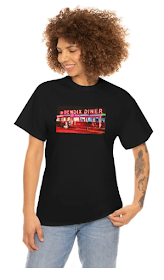
The BENDIX DINER
Hasbouk Heights, New Jersey
On a spring afternoon in Sedona, Arizona, the Coffee Pot Restaurant is somehow as busy as many diners would hope to be during the morning rush. Servers in bright red T-shirts and aprons chat beneath southwestern motifs and rockscape paintings. Hiking through Red Rock State Park just outside of town can really sap your energy. So while there are vortexes that might refill that void, a damn fine cup of coffee also does the job.
But for all the health-focused marketing throughout the touristy town, Sedona hosts more places to get your aura photo taken than cafes with transparently sourced, fairly purchased coffee. So, Coffee Pot’s $3.75 cup of coffee will have to do.
No, it isn’t good for the planet. Or, most likely, for workers. But when there’s nothing much better around, and when the nostalgia hits, a cup of jet-black, bitter diner coffee remains an affordable, bottomless delight.
Sitting in his family’s tavern in Bayonne early in 1912, Jerry O’Mahony had an epiphany. He and his younger brother, Daniel, owned several lunch wagons. Towed by horses to choice locations throughout Hudson County, the lunch wagons were doing good business. But it occurred to O’Mahony that the real money might be in designing and building the wagons, not operating them.
Determined to test the hypothesis, the two brothers and a family friend, a master carpenter named John Hanf, built a lunch wagon in the backyard of the O’Mahony home at 7 East 16th Street in Bayonne.
A Jersey City restaurant entrepreneur, Michael Griffin, purchased the first O’Mahony wagon for $800. A contract, dated July 3, 1912, stated the wagon would operate in West Hoboken (today’s Union City), in the vicinity of Paterson Plank Road and Summit Avenue. Three trolley lines intersected near the proposed location. There would be plenty of foot traffic.The transaction helped set in motion New Jersey’s golden age of diner manufacturing, which in turn made the Garden State the diner capital of the world.
In the decades that followed Jerry O’Mahony’s flash of inspiration, nearly all the major U.S. diner builders—including Jerry O’Mahony Inc.—set up shop in New Jersey, producing the factory-built, stainless-steel eateries still admired worldwide. The early diners turned out by O’Mahony and others were gems of American industrial design; often, they resembled gleaming railroad cars. They remain prime examples of Streamline Moderne architecture, a concept emphasizing sleek lines and aerodynamic forms.
The diners reflected the American Machine Age, a period between the two world wars that saw an explosion of innovation and technology. The diner, in essence, became the machine that fed travelers, factory workers, truck drivers and middle-class American families. They emphasized fresh, homemade food and friendly service at an affordable price.
“Diners are more American than apple pie,” says Paterson native Herbert Enyart, whose career as a diner manufacturer began in 1952 at the Paterson Vehicle Company’s Silk City Diner division.
The mobile lunch wagon—like those the O’Mahonys owned—actually debuted in 1872 on the streets of Providence, Rhode Island. But the diner business found fertile ground in New Jersey, thanks to the state’s population density and superior infrastructure. Diners became an integral part of New Jersey’s culture, commerce, mythology and roadside landscape. (Today’s popular food trucks also descend from lunch wagons, carrying on the mobile-meal tradition.)
Robert Kullman, the one-time president and chief executive officer of Kullman Dining Car Company, which his grandfather established in Newark in 1927, describes diners as “community restaurants—places where anyone could gather, feel relaxed and enjoy good food at a fair price.” The best diners, he says, became fixtures in their communities. “That’s what gave diners a special place in New Jersey.”
Garden State diner builders churned out hundreds of neon and stainless-steel eateries from the 1930s to the 1950s. On September 23, 1951, the New York Times estimated there were 6,000 diners in the United States, most of them east of the Mississippi River. The diners served 2.4 million customers each day.
Garden State masterpieces of the era that remain standing today include the Summit Diner, built in 1938 by Jerry O’Mahony Inc. of Elizabeth, and Bendix Diner in Hasbrouck Heights, installed by Pequannock-based Master Diners, circa 1947. Vintage diners like these are modular, prefabricated, fully equipped eateries, built in a factory, then transported and assembled on location.
Other Jersey manufacturers of that golden age included Fodero Dining Car Company (Bloomfield); Mountain View Diner Company (Singac/Little Falls); Swingle Diner Manufacturing Inc. (Middlesex); Paramount Dining Car Company (Haledon); and Manno Dining Car Company (Fairfield).
Alas, tastes change. By the late 1950s, the diner business began to slump. The Northeast market was saturated, and the anticipated Western markets never took off. People in the Midwest preferred drive-ins and fast-food restaurants. Soon, fast-food chains moved eastward and elbowed their way into choice locations, often competing with family-owned diners.
Adjusting to the new reality, diner owners in the 1960s and 1970s opted for bigger structures more akin to restaurants. Kitchens were hidden away, and significantly more seating was added for customers. Such structures had to be built on-site; the factory-built diner was becoming a dinosaur.
Diner aesthetics were changing, too. “In the early 1960s, municipalities didn’t want diners,” says Kullman. Zoning boards, he explains, objected to the stainless-steel, truck-stop image of the classic diners. “They didn’t even want the word diner in the sign.”
As a result, Kullman’s parents, Harold and Betty, created what they called the colonial look, substituting wood-and-brick exteriors for the stainless-steel facades. Interiors got a warmer, family-friendly look, with wood paneling, hanging light fixtures, smaller counters, and larger booths and tables. Words like restaurant and grill replaced diner in the signage.
The ROADSIDE DINER
A colorful, late-1940s Silk City number built in Paterson, the Roadside was trucked to its location in Wall. It was used as a location for the photo shoot for Bon Jovi’s 1994 greatest hits album, Cross Road.
The ROADSIDE DINER
WALL, NJ
As tastes continued to change in the 1960s and ’70s, Kullman rolled out the “Mediterranean” design, with white stone exteriors and red tile roofs. More recently, diner design has gone retro, with renewed interest in the classic stainless-steel look.
The Kullman company, which moved from Newark to Lebanon in Hunterdon County, created an estimated 1,500 eateries over eight decades, producing everything from early lunch wagons to the sprawling, stainless-steel Tick Tock Diner in Clifton, factory built (in seven sections) in 1994. Robert Kullman’s sale of the company in February 2006 marked the end of factory-made diners in New Jersey.
Today, the Garden State has about 600 diners, including factory-built eateries, site-built structures and storefront businesses. It’s hard to tell anymore what constitutes a diner.
Richard J.S. Gutman, whose 1979 book American Diner is considered the first history of the industry, warns not to be “rigid” when defining a diner. He weighs architectural significance as well as intangibles: quality of food and service; affordability; camaraderie between customers and staff; the cozy, compact interior atmosphere; and whether the eatery has a meaningful place in the community it serves.
“The diner has always been this place where people get together to share ideas,” says Gutman. “It’s this everyday, overlooked culture that makes the world go ’round. Diners have evolved architecturally, and menus have changed, but they’ve always been places where people like to go. It’s part of a diner’s mystique. It’s something that goes beyond food.”
So is New Jersey still the diner capital of the world? “Absolutely,” declares Gutman. “Without a doubt.”
The COLONIAL DINER
LYNDHURST, NEW JERSEY
Built in the mid-1950s by Mountain View Diner Company, the Colonial in Lyndhurst retains the look of the period. Keep an eye peeled for this recurring special: shrimp salad on a roll with bacon, avocado, fresh spinach and tomato slices, with a cup of clam chowder on the side. It’s a winner.
The SUMMIT DINER
As painted by Daniel Carvalho
The SUMMIT DINER
SUMMIT, NEW JERSEY
This iconic 1938 Jerry O’Mahony model has an old-school interior, wherein patrons sitting at the counter soak up the invigorating sights, sounds and smells of food being prepared on the flattop grill. Further allure: the mountain of crisp bacon always piled there.
Part of the scene at Rowan University in Glassboro, Angelo’s was
built by the Kullman Dining Car Company in the early 1950s.
The intimate eatery, with its distinctive exterior awnings and oval neon sign,
earns raves for its breakfasts and homestyle dinners.
ROSIE'S DINER
Little Ferry NJ
Rosie’s Farmland Diner in Little Ferry became world famous in 1973 when it was the location for a Bounty paper towel commercial “the quicker picker upper” featuring actress Nancy Walker as the namesake of the diner.
The owner changed the name of the diner to capitalize on the fame. However, fame was fleeting and the diner closed for good in 1990.
The BENDIX DINER
One of The Most Famous Diners of Them All
Than God it Still Stands and has Not Been Ravished by TIme or so-called Progress
On Route 17 in HASBROUCK HEIGHTS, New Jersey
I played the Jukebox and had man a Cheeseburgers has, but my brother Jimmy who goes there often.
still with his wife Linda, has had many more than me. I first started eating Cheeseburgers here with my Dad in the Mid-60s
New Jersey is said to have approximately 625 diners, more than any other state, and Jersey City has had its share: The Miss America Diner, White Mana Diner, Al’s Diner, Colonette Diner, Flamingo Restaurant, and VIP Diner. The Newark Avenue Diner (a Sterling Diner), at 361 Newark Avenue, was used in the movie Wise Guys and called the "Turnpike Diner." The Tunnel Diner (a Paramount Diner, ca. 1940) at 184 – 14th Street, Boyle Plaza, near the Holland Tunnel, was used for the movie City Hall in 1976.
In 1872, Walter Scott of Rhode Island began the phenomenon of the fast-food eateries when he started a lunch wagon for workers in Providence. The popular lunch wagons soon evolved into stationary eateries that offered 24-hour service in the 1910s. The diners of the 1930s and 1940s displayed an art deco design and the use of stainless steel, tile, and glass for the exterior; Formica paneling, counters and stools, booths with jukeboxes, and tables with napkin dispensers and ketchup became synonymous with the interiors of the diners.
The Miss America Diner is an example of the "Streamline" style of diner manufactured by Jerry O'Mahony during the 1940s. According to James P. Johnson, "In 1913, Bayonne's Jerry O'Mahony [1890-1969] noticed the resemblance between the local roadside lunch wagons and the railroad dining cars and coined the word diner" (113). His production of former trolleys or electric streetcars into restaurants, Johnson remarks, began in a local garage: "O'Mahony kept the wheels on his diners so they could both avoid building codes and change locations. . . . [He also] encouraged his buyers to leave the doors propped open to attract those who dreaded the male-dominated atmosphere. By the 1920s, O'Mahony and others added tables and booths to attract the fairer sex" (113-114). He moved his business to Elizabeth, NJ, and manufactured hundreds of diners there until 1956.
The Miss America Diner is "the best diner in New Jersey . . . . There’s no first runner-up either," writes Peter Genovese, author of several works on roadside architecture (New Jersey Curiosities 32). In many respects, it meets the criteria for diners of the "golden age" in the 1940s as defined by Genovese: "Diners were long, low, 'fluid looking' structures with no hard edges, all corners were rounded. One design trade of this time: the generous use of reflective surfaces" (Jersey Diners 25).
With its classic-looking design and décor, the Miss America Diner has been the setting for several television commercials, including promotional campaigns for Cherry Seven-Up and Tums. The interior of the original section of the diner retains most of its original features such as the white Formica-paneled recessed ceiling with peach trim, peach patterned terrazzo floor, gray Formica counter, stools, tables, and lighting. The peach booths and wood blinds have been replaced and the jukeboxes and soda dispenser removed. Over the years, the favorite food choices of customers who call the Miss America "the Old-Fashioned Diner with the Home-Style Cooking" have been said to be its breakfast specials, meatloaf, and chocolate cream pie.
According to waitress Marilyn Borelli, a more than thirty-year veteran at the popular eatery, the diner dates back to 1942. It was originally called the Joe Cherico Diner for the owner. When Fritz Welte, a German immigrant, bought the diner from Cherico, he renamed it the Miss America Diner to honor his adopted home. A nephew, Alfred Welte, and his wife Helga Welte, later purchased the diner from Fritz. According to Mrs. Borelli, the diner was then sold to three individuals of Greek ancestry (Andy, Peter and Tony). Tom Carlis became the diner's next owner until he retired in 2002. In the early 1990s, Carlis and his co-owner Sam Galatis expanded the stainless steel diner with a 40-seat dining room decorated in blue Formica.
The next owner of the diner was Miquel and Monica Figueroa. In 2005, it was purchased by Christos Stamatis, the former owner of Constantine's Restaurant in nearby Bayonne. Since 2014, Tony Margetis has become the owner of the local landmark. Margetis is the former owner of the Colonette on Rt. 440 in Jersey City
The New Jersey City University campus now extends from Kennedy Boulevard to the corner of Westside and Culver avenues where the Miss America is located. The diner, in fact, is surrounded by the right angle of the university's Athletic and Fitness Center, and serves members of the university community among its patrons.